

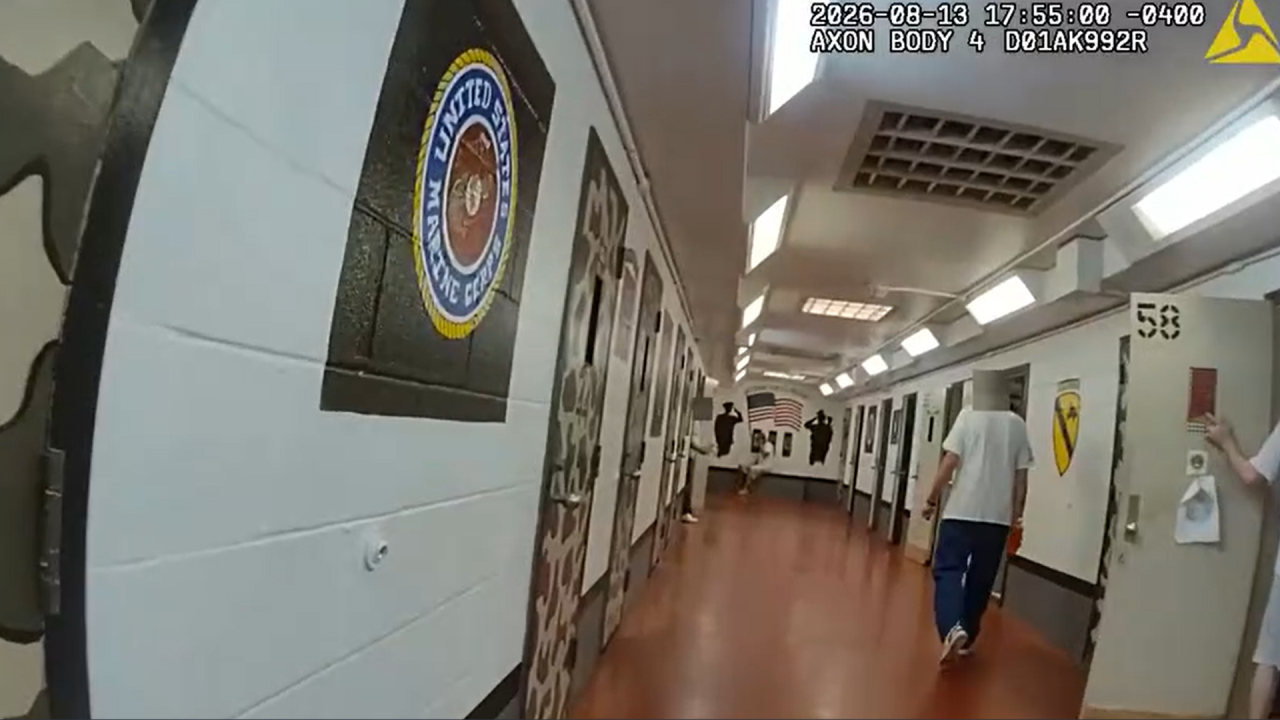


BALTIMORE — Every correctional officer working in Maryland's state prison system is now equipped with a body-worn camera, a move state officials say is already helping reduce violence inside correctional facilities.
The Maryland Department of Public Safety and Correctional Services (DPSCS) demonstrated the technology Monday at the Baltimore Central Booking and Intake Center, highlighting how officers use the cameras during routine operations, inmate escorts, and emergency situations.
Deputy Secretary for Operations David Greene said the statewide rollout was the end of a two-year effort that began with a pilot program in early 2024. The department started full implementation in May 2026 and completed deployment on July 2.
Greene said the cameras serve three primary purposes: preventing violence, increasing accountability, and protecting both officers and incarcerated individuals.
"The presence of a camera during an incident in and of itself acts as a deterrent," Greene said. "It helps reduce false allegations against staff while also providing a way to identify conduct that is not aligned with department policies."
According to DPSCS, officers are required to activate cameras during inmate escorts, population counts, mass movements, and serious incidents. Officers can also activate cameras at their discretion if they believe an interaction may escalate or should be documented. Recording is prohibited during certain medical, mental health, and privacy-related situations.
Officials demonstrated how cameras are assigned to officers at the start of a shift and uploaded to a cloud-based storage system when returned to a docking station at the end of the day. The footage can then be reviewed by supervisors, investigators, and administrators across the state.
Greene said the department is already seeing early signs of success.
"Our month of July saw a 34% decrease in all types of assaults," he said.
Because the statewide rollout was only completed last month, officials cautioned that Maryland's sample size remains limited. However, DPSCS said correctional systems in other states have reported decreases in assaults and violent incidents after implementing similar programs.
The agency is spending approximately $4.1 million per year on the body camera program under a 10-year contract. The cost includes cameras, software, cloud storage, video redaction tools, transcription services, and licensing for correctional staff.
Officials said body camera footage is stored indefinitely and may be used for investigations, disciplinary reviews, audits, and other operational purposes.
Correctional officers who participated in Monday's demonstration said the cameras have been well received among staff and can help de-escalate situations by making incarcerated individuals aware they are being recorded.
The body camera rollout is part of a broader effort by DPSCS to expand surveillance and accountability measures within Maryland's correctional facilities, including recent upgrades to facility camera systems across the state.

